
Last month, one of my uncle's longest-serving staff walked into the shop and asked for his salary slips. Three years of them. He was applying for a two-wheeler loan, and the bank wouldn't move without payslips. The shop had been paying him on time, every month, in full, for eleven years. There was not a single slip to show for it.
Search for a salary slip format and you'll see why. Every template online is built for IT companies — HRA, LTA, Special Allowance, flexible benefit plans. None of it describes how a shop actually pays people.
So we built a free salary slip format for shop employees in India, in Excel, that handles the things shops actually deal with: daily wages, days present, overtime, and salary advances. Download it below.
One thing before the template. Issuing a wage slip is not optional. The Payment of Wages Act required it since 1936, and the new labour codes that replaced it in November 2025 carried the duty forward. A 3-person shop is not exempt.
A shop salary slip needs five things: gross wage (basic + DA), days worked, overtime hours and earnings, deductions (PF, ESI, advances), and net amount paid. If your slip shows those five clearly, you are compliant. Everything else is decoration.
Why corporate payslips don't work for Indian shops
Take a salesman earning ₹15,000 a month at a cloth shop. Now look at a corporate payslip template: House Rent Allowance, Leave Travel Allowance, Special Allowance, Flexi Basket.
Which of those does he get? None. He gets a monthly wage, maybe a Diwali bonus, and overtime during season. The corporate template asks you to slice his ₹15,000 into six components that exist purely for income-tax optimisation — which matters exactly nothing to someone below the taxable limit.
What a shop payslip actually has to capture is different:
- Days present and days off. Wages in most shops still flow from the attendance register, not from a fixed annual CTC. If your register is paper, this is the column that causes the most disputes. I've written before about moving attendance off paper, and the payslip is the strongest reason to do it.
- LOP (loss of pay). Unapproved leave reduces the month's wage. The slip has to show how many days were cut and at what rate, or the staff member finds out at the cash drawer.
- Overtime hours and the amount. Not buried inside gross — separately, hours times rate. The law wants it broken out, and so does your staff. The overtime calculation itself has its own rules and double rate, covered separately.
- Daily wage and piece-rate maths. A tailor paid per blouse and a helper paid per day both need slips. No corporate template even has the columns.
The 5 mandatory fields every shop salary slip must have
The old Form XI wage slip under the Minimum Wages Act is the cleanest legal skeleton for this, and the labour-code rules carry the same substance. Strip away the formatting and the law wants five things on the slip:
- Gross wage (basic + DA), and how it was arrived at.
- Number of days worked or shifts completed in the wage period.
- Overtime hours and the overtime earnings, shown separately.
- Deductions, each one named: PF, ESI, advance recovered, anything else.
- Net amount paid, the figure that actually reaches their hand or account.
One habit worth building in 2026: show the calculation, not just the amount. "PF ₹936" invites questions. "PF: 12% of basic ₹7,800 = ₹936" answers them before they're asked. Inspectors and banks both prefer it, and your staff will trust it.
How to handle ESI and PF for shop staff (the ₹21,000 rule)
This is the part shop owners get wrong most, so here it is plainly.
ESI applies if your shop has 10 or more employees (a few states say 20) and the staff member earns ₹21,000 or less gross per month. You deduct 0.75% of gross wages from the employee and contribute 3.25% yourself. Above ₹21,000, they're outside ESI. Below 10 staff, your shop likely isn't covered at all.
PF applies if your shop has 20 or more employees. The deduction is 12% of basic + DA from the employee, matched by you. Below 20 staff, registration is voluntary.
In a 6-person shop, a payslip with zero statutory deductions is a perfectly legal payslip.
Which means something nobody tells you: if you run a 6-person shop, your payslip may have zero statutory deductions, and that is perfectly legal. Don't invent deductions to make it look official.
Quick worked example. Latha, a saree-shop assistant (regular readers have met her before), earns ₹15,600 a month, basic ₹7,800. Festival month, 18 hours of overtime worth ₹2,700. Her shop has 22 staff, so both PF and ESI apply:
| Line | Calculation | Amount |
|---|---|---|
| Gross wage | monthly | ₹15,600 |
| Overtime | 18 hrs × ₹150 | + ₹2,700 |
| PF | 12% of basic ₹7,800 | − ₹936 |
| ESI | 0.75% of ₹18,300 | − ₹138 |
| Advance recovered | Diwali advance, 2nd of 4 instalments | − ₹1,000 |
| Net paid | ₹16,226 |
That advance line matters. Salary advances are everywhere in Indian retail, and the recovery must appear on the slip as a named deduction with the instalment noted. An advance recovered silently is the fastest way to convert a loyal employee into a suspicious one.
Download the free salary slip format in Excel
This is not a corporate template with the logos swapped. It has the columns a shop actually uses: Days Present, Weekly Offs, LOP Days, Daily Wage option, Overtime Hours, Advance Deducted. The ESI and PF cells calculate themselves from basic and gross, and they're easy to blank out if your shop is below the thresholds. Fill in the attendance numbers, and the net-pay figure is ready to print or WhatsApp. It works for monthly salaries, daily wages, or a mix of both.
Download the free Excel template
Microsoft Excel (.xlsx) · opens in Excel, Google Sheets, or LibreOffice · free, no email required.

The problem with Excel (and how Rotabook fixes it)
Honest admission: the template above is exactly how I'd run payslips for a 3-person shop. Excel is free, you control it, done.
At 15 staff across two outlets, it turns into a monthly tax on your evening. You're cross-checking the attendance register against the sheet, counting LOP days by hand, recalculating overtime for the four people who stayed late during the sale, and remembering whose advance has two instalments left. One transposed digit and someone's rent is short.
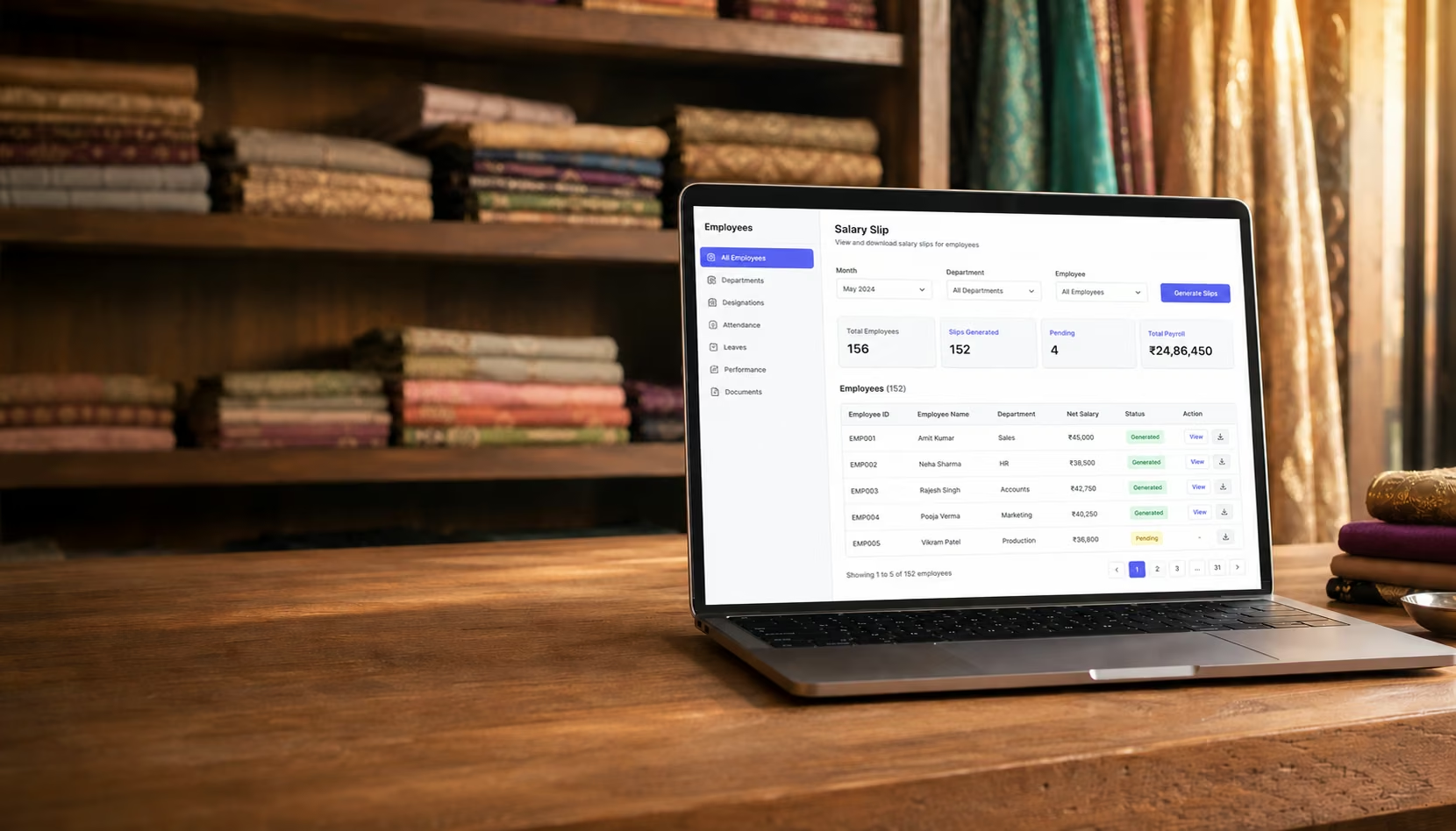
That chain is the thing Rotabook automates. The biometric punch data comes in on its own, attendance becomes days present without anyone counting, overtime hours carry their double-rate calculation with them, and the compliant salary slip generates in one click — advances and all. The slip you get is the same format as the template above. The difference is that nobody typed the numbers.

Questions shop owners ask me
Is a salary slip mandatory for small shops in India?
Yes. Under the Payment of Wages Act and the Minimum Wages Act (Form XI), both now folded into the labour codes, every employer — regardless of size — must issue a wage slip to employees at least one day before paying their salary.
What is the ESI deduction for a salary below ₹21,000?
If your shop is covered under ESI and the employee earns ₹21,000 or less per month, you must deduct 0.75% of their gross wages as the employee's contribution, and add 3.25% as the employer's contribution.
How do I show salary advances on a payslip?
Salary advances should be listed clearly under the "Deductions" column. It is legally required to show the exact amount recovered from that month's pay so the employee understands their net take-home salary.
Does a daily wage worker need a salary slip?
Yes. The wage slip requirement does not depend on how wages are calculated. A worker paid ₹500 per day for 24 days needs a slip showing days worked, rate, gross, deductions, and net — the same five fields as anyone else.
Can a salary slip be handwritten?
Legally, yes, as long as the mandatory fields are there and it's signed. Practically, banks and embassies treat handwritten slips with suspicion. A printed or digital slip from a consistent format costs you nothing extra and saves your staff grief later.
Is a salary slip valid without a company seal?
No law requires a seal. The shop's name, the employee's details, the five mandatory fields, and an authorised signature make it valid. The seal is convention, not compliance.
India's labour codes were notified in November 2025 and state rules are still rolling out through 2026, so thresholds and forms can shift by state. This is practical guidance from a shop family — not legal advice. For anything contested, confirm with your local labour office or a compliance professional.